


Why Does My CPAP Pressure Keep Changing During the Night?

If you use an auto-adjusting CPAP, you may notice that the pressure is not the same all night.
It may start low, rise later, settle again, then increase during another part of the night.
For many patients this looks worrying.
In most cases, however, changing pressure is exactly what an Auto CPAP is designed to do.
What Is the Machine Actually Responding To?

An auto-adjusting CPAP does not know whether you are “sleeping well” in the same way a full sleep study does.
Instead, it analyses your airflow.
With ResMed AutoSet, the algorithm responds mainly to three signs of upper-airway obstruction:
flow limitation – the shape of the breath suggests the airway is narrowing
snoring – vibration suggests the airway is becoming unstable
obstructive apnoea – airflow stops because the airway closes [1]
When these signals appear, the machine can increase pressure within the prescribed range.
When breathing becomes stable again, pressure may gradually fall.
Why Is My Pressure Higher at Certain Times of the Night?

Your pressure requirement is not necessarily constant.
Two particularly important factors are sleep stage and body position.
REM sleep
REM is the stage in which we dream most vividly.
Muscle tone is lower during REM, and in some patients the upper airway becomes more vulnerable to collapse.
Research has shown that the effective CPAP pressure may be higher during REM than during non-REM sleep. [2]
Because REM periods tend to become longer later in the night, some people notice more pressure activity in the early morning hours.
Sleeping on your back
Obstructive sleep apnoea is often worse when a person sleeps on their back.
Gravity can make the tongue and soft tissues fall backwards and narrow the airway.
Studies examining CPAP titration have shown that some patients require more pressure while supine than while sleeping on their side. [2,3]
That is one reason the same person may need 8 cmH₂O during one part of the night and 12 cmH₂O during another.
Can Nasal Congestion Change My Pressure?
Yes.
A blocked or congested nose can increase airflow resistance and alter the breathing pattern seen by an automatic CPAP.
The AASM notes that APAP can be useful because pressure requirements may vary with factors including seasonal upper-airway changes and upper respiratory infections. [4]
If your pressure suddenly looks different while you have a cold, sinus congestion or severe allergies, it may be temporary.
What About Alcohol?
Alcohol can make the upper airway more collapsible and worsen obstructive breathing in susceptible patients.
An Auto CPAP may therefore need to respond differently on a night after alcohol compared with a typical night.
This is one reason we prefer to look at trends over several nights, rather than making decisions from one unusual night.
Can Mask Leak Make the Pressure Change?
Leak needs to be considered whenever pressure behaviour changes.
Modern CPAP machines are designed to compensate for a degree of leak, but large or unstable leak can interfere with therapy and with the accuracy of the data the machine uses.
If the pressure appears unusually high and the leak graph is also high, the first question should not automatically be, “Do I need more pressure?”
It may be, “Is the mask sealing properly?”
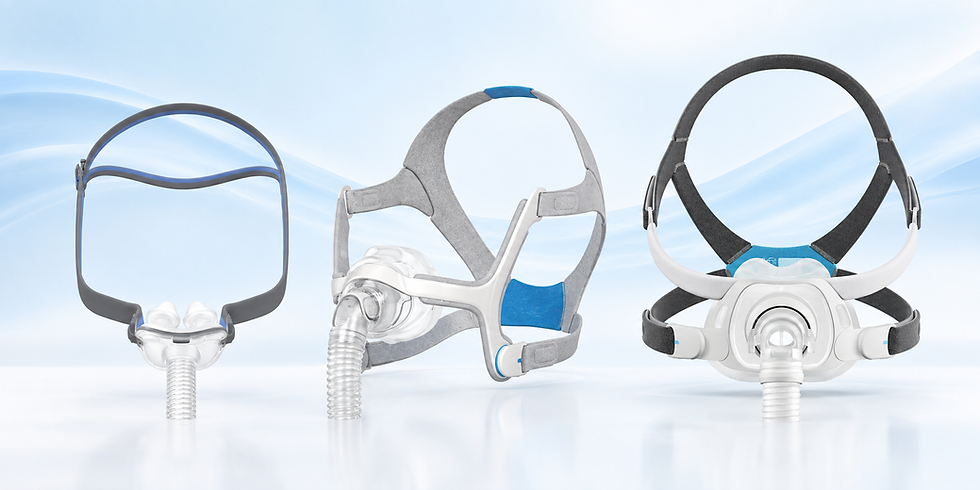
Mask fit, cushion wear, mouth leak and the type of mask being used can all matter.
Why Did the Pressure Suddenly Jump?
A short pressure rise does not necessarily mean that something is wrong.
The machine may have detected a cluster of flow-limited breaths, snoring or an obstructive event.
It can also happen when you roll onto your back or enter a more vulnerable stage of sleep.
Think of an Auto CPAP as a machine that is continually adapting to the airway in front of it.
A pressure graph that moves is therefore not automatically a bad graph.
Does the Highest Pressure Mean That Is the Pressure I Need All Night?
No.
This is a very common misunderstanding.
If your device briefly reaches 14 cmH₂O, that does not mean you necessarily need fixed CPAP at 14 all night.
Clinicians often look at values such as median pressure and the 95th-percentile pressure, together with AHI, leak, flow limitation, symptoms and the shape of the pressure graph.
A single maximum value without context tells us very little.
Can Pressure Changes Wake Me Up?
They can in some patients.
Most people tolerate automatic pressure changes well, but the AASM systematic review notes that pressure fluctuations may disturb sleep in some individuals. [5]
If your AHI looks excellent but you repeatedly wake when the pressure rises, your treatment may need refinement.
Possible solutions depend on the cause and may include adjusting the pressure range, reviewing EPR or ramp settings, improving mask fit, treating nasal obstruction or considering whether a stable fixed pressure would be more comfortable.
That decision should be made from the full treatment picture rather than simply lowering the maximum pressure.
When Should Pressure Changes Be Reviewed?
Ask for a data review if:
the pressure repeatedly reaches the maximum setting
your residual AHI remains high
you have persistent large leak
you are waking with uncomfortable pressure
you develop significant aerophagia or bloating
snoring has returned despite treatment
your symptoms are returning
your pressure requirement has changed substantially and remains different for several nights
If the machine only reaches a higher pressure briefly and the AHI, leak and symptoms are good, the pressure rise may simply represent normal AutoSet behaviour.
Should I Lower the Maximum Because the Pressure Feels High?
Not without looking at the data.
Capping pressure too low can make the graph look calmer while allowing obstructive events to return.
The better question is why the pressure is rising.
If it is responding appropriately to genuine obstruction, lowering the maximum may sacrifice treatment effectiveness.
If the rise is associated with leak, discomfort or another problem, that problem should be addressed directly.
The Bottom Line
If you use Auto CPAP, pressure changes are normal.
Your airway changes with sleep stage, body position, congestion and other factors, and the machine is designed to respond.
The goal is not to keep the pressure graph perfectly flat.
The goal is to keep your airway open using the lowest effective pressure that still provides comfortable, stable therapy.
Clinical Note
Do not change prescribed pressure limits solely because you saw a high number on one night. Pressure, leak, residual AHI, symptoms and the pattern over multiple nights should be reviewed together.
Written by Jean-Marie Claassens Clinical Technologist (Pulmonology) Owner – CPAP Equip & Breathe Smart Lung Function & Sleep Lab
CPAP Equip Clinically Supported CPAP Therapy. Nationwide.
Frequently Asked Questions
Why does my CPAP pressure go up while I am asleep?
On an auto-adjusting CPAP, pressure rises when the algorithm detects signs that the upper airway is becoming less stable, such as flow limitation, snoring or obstructive apnoeas.
Is changing CPAP pressure normal?
Yes, if you use APAP or AutoSet. Changing pressure is the intended behaviour of an auto-adjusting machine. Fixed-pressure CPAP should remain at the prescribed treatment pressure apart from ramp or comfort features.
Why is my pressure often higher in the early morning?
REM sleep becomes more prominent later in the night and some people need more pressure during REM. Body position can also influence pressure requirements.
Does a pressure spike mean my sleep apnoea is getting worse?
Not necessarily. A short pressure rise may simply reflect a temporary period of snoring, flow limitation, REM sleep or sleeping on your back. Trends over multiple nights are more useful than one isolated peak.
When should my CPAP pressure be reviewed?
A review is sensible if pressure repeatedly reaches the maximum setting, residual AHI remains elevated, leak is significant, treatment becomes uncomfortable, or symptoms return.
Research & References
ResMed. ResMed Therapy Handbook – AutoSet Algorithm (APAP). Manufacturer technical documentation, 2025.
Lee EM, et al. Effective Continuous Positive Airway Pressure Changes Related to Sleep Stage and Body Position in Obstructive Sleep Apnea during Upward and Downward Titration. J Clin Neurol. 2020. PMID: 31942763.
Penzel T, Möller M, Becker HF, et al. Effect of sleep position and sleep stage on the collapsibility of the upper airways in patients with sleep apnea. Sleep. 2001;24(1):90–95. doi:10.1093/sleep/24.1.90.
Patil SP, Ayappa IA, Caples SM, et al. Treatment of Adult Obstructive Sleep Apnea with Positive Airway Pressure: AASM Clinical Practice Guideline. J Clin Sleep Med. 2019;15(2):335–343. doi:10.5664/jcsm.7640.
Patil SP, Ayappa IA, Caples SM, et al. AASM Systematic Review, Meta-Analysis, and GRADE Assessment of Positive Airway Pressure Therapy. J Clin Sleep Med. 2019;15(2):301–334. doi:10.5664/jcsm.7638.

Comments