_edited_edited.png)


Why Setting the Correct Mask Type on Your CPAP Machine Matters

When you set up your CPAP machine, you may be asked to choose a mask type: pillows, nasal or full face. It may seem like a small detail, but it helps your machine work correctly with the mask you are wearing.
If you change to a different style of mask, it is a good idea to check this setting too. Here is why it matters—and what you need to do.
Why does your CPAP machine need to know your mask type?
Different masks allow air to move through them in slightly different ways. A small nasal pillows mask does not have the same shape or airflow resistance as a nasal mask or a full-face mask.
By selecting the correct mask type, you give your CPAP machine the information it needs to work with that particular style of mask. This helps the machine compensate for the normal differences between mask designs.
It helps your machine deliver therapy accurately
Your CPAP machine measures airflow throughout the night and delivers the pressure prescribed for your treatment. The correct mask setting helps it account for the resistance created by the mask.
Choosing the wrong mask type does not necessarily mean that your therapy will stop working. However, matching the setting to your actual mask removes an unnecessary source of error and helps your machine perform as intended.
It helps with leak reporting
Every CPAP mask releases a small, continuous flow of air through its vent holes. This is normal and necessary—it helps clear the air you breathe out. These vents should never be covered.
A mask leak is different. This happens when air escapes around the cushion, through an open mouth while using a nasal mask, or because the mask does not fit properly.
Because each mask design has its own expected airflow, selecting the correct mask type helps your machine separate normal venting from unwanted leak more accurately.
It makes your CPAP data more useful
Your CPAP data helps us see how well your therapy is working. We look at information such as your AHI, mask leak, pressure and hours of use.
When your mask type is set correctly, this information is easier to interpret. It gives you and your CPAP provider a clearer picture of whether your therapy is effective or whether your mask fit or settings need attention.
Which mask type should you choose?
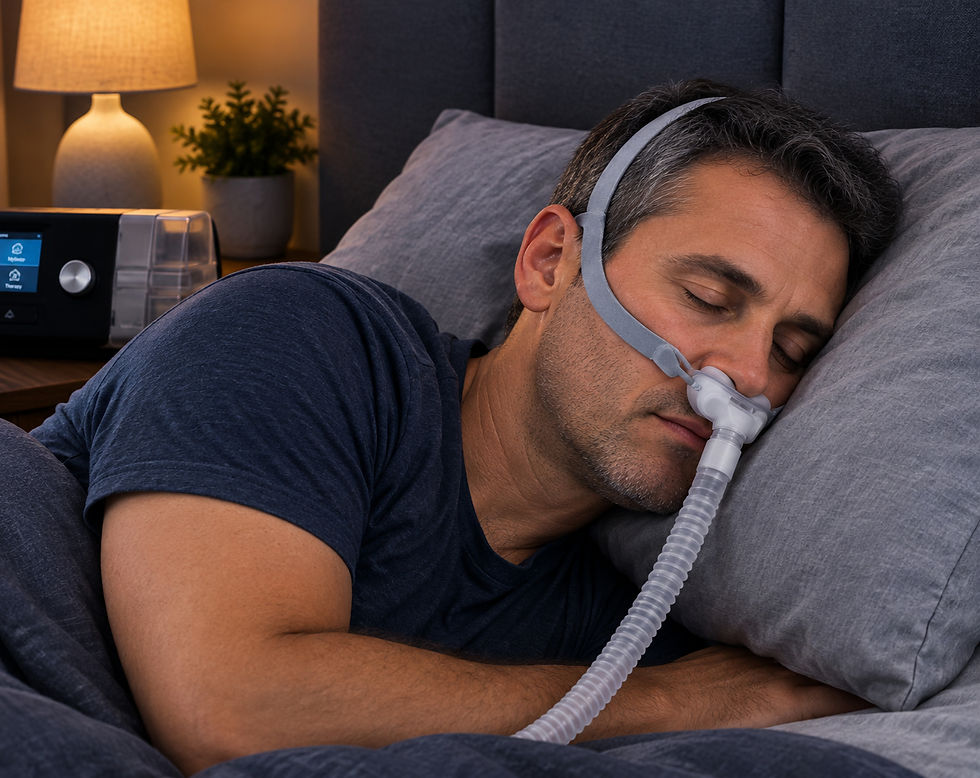
Pillows: Choose this for a nasal pillows mask that seals at the nostrils, such as the ResMed AirFit P10.
Nasal: Choose this for a mask that covers only the nose, such as the ResMed AirFit N20.
Full face: Choose this for a mask that allows you to breathe through both your nose and mouth, such as the ResMed AirFit F20 or AirFit F40.
If you are unsure, check the user guide for your mask or ask your CPAP provider. Some mask names and designs can be confusing, so it is better to confirm than to guess.
When should you check the setting?
Check your mask type setting when:
you start using a new CPAP machine;
you change from one style of mask to another—for example, from nasal pillows to a full-face mask;
you receive a replacement machine; or
your machine shows a mask setting that does not match the mask you are using.
You normally do not need to change the setting when you replace only the cushion or headgear with parts from the same mask model.
Will changing masks change my pressure?
Changing the mask type setting does not replace or change your prescribed pressure range. It simply tells your machine which type of mask is connected.
Do not change your treatment pressure because you have changed masks. If your new mask feels uncomfortable, leaks badly or your therapy results worsen, contact your CPAP provider for a proper review.
A quick check can make a difference
Setting the correct mask type takes only a few seconds. It helps your machine work with your mask, improves the usefulness of your leak information and supports more accurate therapy monitoring.
At CPAP Equip, we supply ResMed CPAP equipment with clinical setup support and AirView monitoring where applicable. If you are unsure which option to select, send us the exact model of your mask and CPAP machine and we will help you.
Frequently asked questions
What happens if I selected the wrong mask type?
Your therapy may still work, but your machine may not compensate for the mask as accurately as intended. Correct the setting when you notice the mistake. You do not need to panic or stop using your CPAP.
Should I change the setting when I replace my cushion?
No, not if you are still using the same mask model and mask style. Change it only when you move to a different mask category or when the manufacturer's instructions tell you to do so.
Can I use a full-face mask with an automatic CPAP machine?
Yes. Make sure the mask is compatible with your machine, fits correctly and that full face is selected as the mask type. Ask for help if large leaks continue.
Jean-Marie Claassens
Clinical Technologist (Pulmonology)
CPAP Equip


Comments