


Why Is My CPAP Suddenly Using Higher Pressures Than Before?

You have been using your Auto CPAP for months.
Your pressure usually sits in a familiar range — and then suddenly the machine starts reaching higher numbers.
Does that mean your sleep apnoea has become worse?
Not necessarily.
Auto CPAP pressure can change from night to night for several completely understandable reasons.
The key is to look at the pattern, not panic about one high number.
First: Auto CPAP Is Supposed to Change Pressure

An Auto CPAP does not use one pressure all night.
It watches the shape of your airflow and responds when the airway appears less stable.
ResMed AutoSet, for example, adjusts pressure in response to flow limitation, snoring and obstructive apnoeas. [1]
So a higher pressure often means the machine is responding to something it detected.
The next question is: what changed?
1. You May Be Sleeping on Your Back More
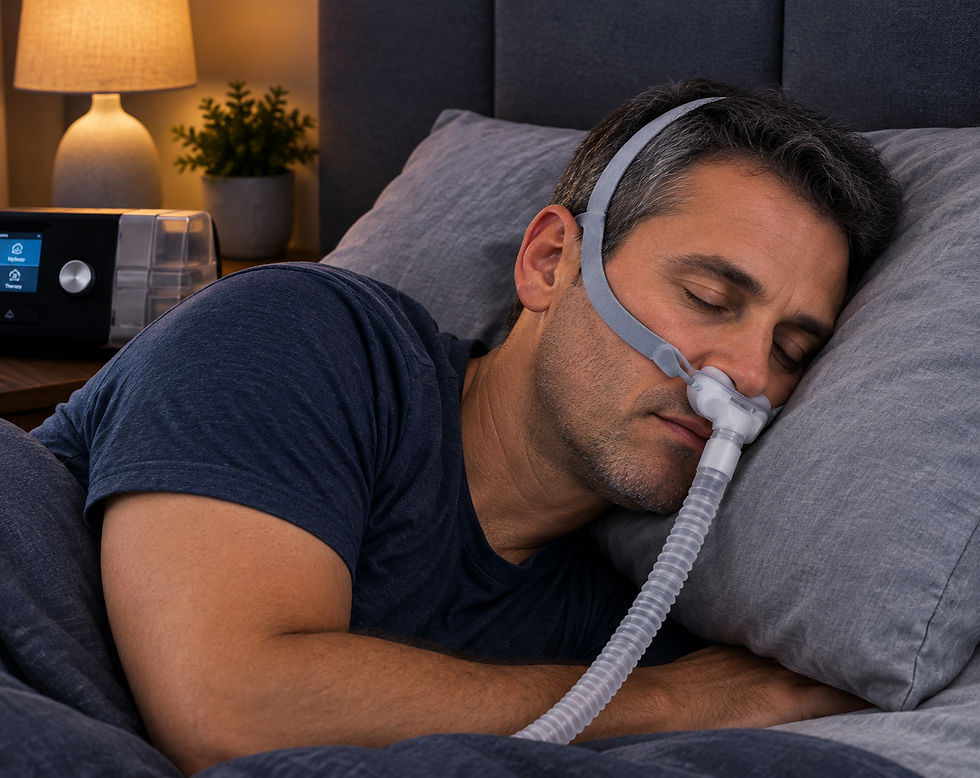
Body position can make a surprisingly large difference.
For many people with obstructive sleep apnoea, the airway collapses more easily while lying on the back.
Research has shown that upper-airway collapsibility and effective CPAP pressure can change with body position, with higher pressures often required in supine sleep. [2,3]
Maybe you normally sleep mostly on your side but spent more time on your back after an injury, while travelling, or because of a different pillow.
That alone can change the pressure graph.
2. You May Be Spending More Time in REM Sleep
REM sleep can also influence pressure needs.
In one experimental CPAP titration study, the effective pressure was higher during REM than non-REM sleep. [2]
REM periods become longer later in the night.
That means a patient may need relatively modest pressure for much of the night and then require more support during the early morning hours.
If your higher pressures occur mainly towards morning, REM may be part of the explanation.
3. Your Nose May Be More Congested
A cold, sinus problem or allergy flare can change airflow through the upper airway.
The AASM notes that APAP has the advantage of adapting to changes such as seasonal upper-airway problems and upper respiratory infections. [4]
If your pressure increased at the same time that you became blocked or congested, the two may be related.
Before changing the CPAP settings, deal with the nasal problem appropriately and see whether the pressure returns to its usual pattern.
4. Your Mask or Leak Has Changed
Whenever pressure suddenly changes, check leak.
A cushion may be wearing out.
Headgear may have stretched.
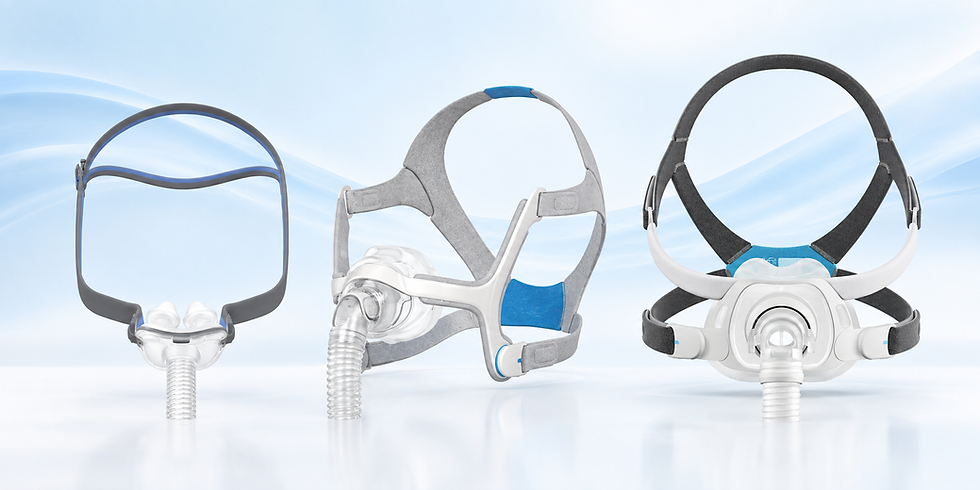
You may have changed from a nasal mask to a full-face mask.
You may also be mouth-leaking while using a nasal interface.
Large leak can affect treatment quality and the reliability of the information the machine is using.
Mask type can matter too. Research has found that some oronasal masks may require higher PAP levels than nasal masks in certain patients. [5]
So if your pressure changed soon after changing masks, that detail is important.
5. Alcohol May Be Playing a Role
Alcohol can make the upper airway more collapsible and can worsen obstructive breathing in susceptible people.
If the airway becomes less stable, an Auto CPAP may need to increase pressure more often.
A single higher-pressure night after an unusual evening does not necessarily mean your long-term treatment needs have changed.
6. Your Weight or Airway May Have Changed
Pressure needs can change over time.
AASM guidance specifically recognises that APAP can adapt to longer-term changes such as weight fluctuations and changes in upper-airway anatomy. [4]
Weight is not the only factor that determines OSA severity, and the relationship is not perfectly predictable.
But a meaningful weight change can be one reason your old pressure pattern no longer looks the same.
7. You May Simply Be Seeing Normal Night-to-Night Variation
Not every night is identical.
Sleep position changes.
REM duration changes.
Nasal resistance changes.
Sleep time changes.
Even when nothing obvious has happened, an auto-adjusting device may use a somewhat different pressure profile.
That is why we are much more interested in several nights of data than one isolated peak.
What Does “95th Percentile Pressure” Mean?
Patients often become worried when they see a 95th-percentile pressure of, for example, 13 cmH₂O.
This does not mean the machine delivered exactly 13 all night.
It means the pressure was at or below that level for approximately 95% of the recorded period and above it for the remaining portion.
It is a useful trend value, but it must be interpreted with the rest of the report.
When Does a Higher Pressure Deserve Attention?
A persistent rise becomes more meaningful if it occurs together with:
repeated pressure at or near the maximum setting
a rising residual AHI
new or increased snoring
significant mask leak
frequent awakenings
aerophagia or uncomfortable bloating
renewed daytime sleepiness
morning headaches
a major change in weight or health
a new mask or interface
That is when a proper data review becomes useful.
What We Would Review in AirView
For a ResMed patient, we would not look at pressure alone.
We would review:
usage
residual AHI
obstructive and central event information where available
leak
pressure trends
the timing of events
symptoms
mask changes
recent illness or congestion
A pressure increase can be appropriate.
If the machine is using more pressure and the airway is well controlled, the device may simply be doing its job.
If pressure is rising and treatment is becoming less effective or less comfortable, we need to understand why.
Should I Just Lower the Maximum Pressure?
Usually, no.
Lowering the maximum makes the number look better, but it may prevent the machine from delivering the pressure needed to control obstruction.
A more sensible approach is:
find out why the pressure increased first.
Sometimes the answer is mask leak.
Sometimes it is congestion.
Sometimes it is sleep position.
Sometimes the patient's actual pressure requirements have changed.
The Bottom Line
A sudden higher CPAP pressure does not automatically mean your sleep apnoea has suddenly become severe.
Look for changes in sleep position, REM sleep, nasal congestion, alcohol, mask fit, leak and longer-term weight or airway factors.
One night is a snapshot.
A consistent trend is much more useful.
Clinical Note
If your pressure requirement remains substantially higher, repeatedly reaches the maximum setting, or is accompanied by a rising AHI or returning symptoms, have the therapy data reviewed rather than changing the pressure range blindly.
Written by Jean-Marie Claassens Clinical Technologist (Pulmonology) Owner – CPAP Equip & Breathe Smart Lung Function & Sleep Lab
CPAP Equip Clinically Supported CPAP Therapy. Nationwide.
Frequently Asked Questions
Why has my Auto CPAP pressure suddenly increased?
Temporary changes can occur because of sleeping on your back, REM sleep, nasal congestion, alcohol, mask or leak changes and normal night-to-night variation. Persistent changes should be reviewed with the rest of your treatment data.
Does higher CPAP pressure mean my sleep apnoea is worse?
Not necessarily. A single night of higher pressure is not enough to conclude that OSA has worsened. Trends in pressure, AHI, leak, symptoms and sleep conditions need to be considered together.
Can a new mask change my pressure needs?
Yes. Mask type and leak can affect treatment. Research has found that some oronasal masks may require higher pressures than nasal interfaces in certain patients.
Can weight change affect CPAP pressure?
Yes. Pressure requirements may change with weight and changes in upper-airway anatomy, although the relationship is individual and not every weight change produces a predictable pressure change.
Should I lower my maximum pressure if it has gone up?
Do not lower the maximum simply to stop the machine reaching a higher number. First determine why pressure is rising and whether the higher pressure is controlling genuine obstruction.
Research & References
ResMed. ResMed Therapy Handbook – AutoSet Algorithm (APAP). Manufacturer technical documentation, 2025.
Lee EM, et al. Effective Continuous Positive Airway Pressure Changes Related to Sleep Stage and Body Position in Obstructive Sleep Apnea during Upward and Downward Titration. J Clin Neurol. 2020. PMID: 31942763.
Penzel T, Möller M, Becker HF, et al. Effect of sleep position and sleep stage on the collapsibility of the upper airways in patients with sleep apnea. Sleep. 2001;24(1):90–95. doi:10.1093/sleep/24.1.90.
Patil SP, Ayappa IA, Caples SM, et al. Treatment of Adult Obstructive Sleep Apnea with Positive Airway Pressure: AASM Clinical Practice Guideline. J Clin Sleep Med. 2019;15(2):335–343. doi:10.5664/jcsm.7640.
Bettinzoli M, Taranto-Montemurro L, Messineo L, et al. Oronasal masks require higher levels of positive airway pressure than nasal masks to treat obstructive sleep apnea. Sleep Breath. 2014;18(4):845–849. doi:10.1007/s11325-014-0954-4.

Comments