_edited_edited.png)


What Is a Good Leak Rate on CPAP? How Much Leak Is Too Much?

If you check your CPAP data and see a leak rate of 5, 15, 24 or even 30 L/min, you may wonder:
Is my CPAP mask leaking too much — and is it affecting my therapy?
The short answer: For ResMed CPAP therapy, lower leak is generally better. A leak above approximately 24 L/min is considered a high leak and should be investigated, particularly if it happens for significant periods during the night.
But the number alone does not tell the whole story. A brief leak when you turn over in bed is very different from spending a large part of the night with air escaping from your mask or mouth.
Understanding what your leak data actually means can help you determine whether your CPAP therapy is working effectively — or whether something needs attention.
What Does CPAP Leak Rate Mean?
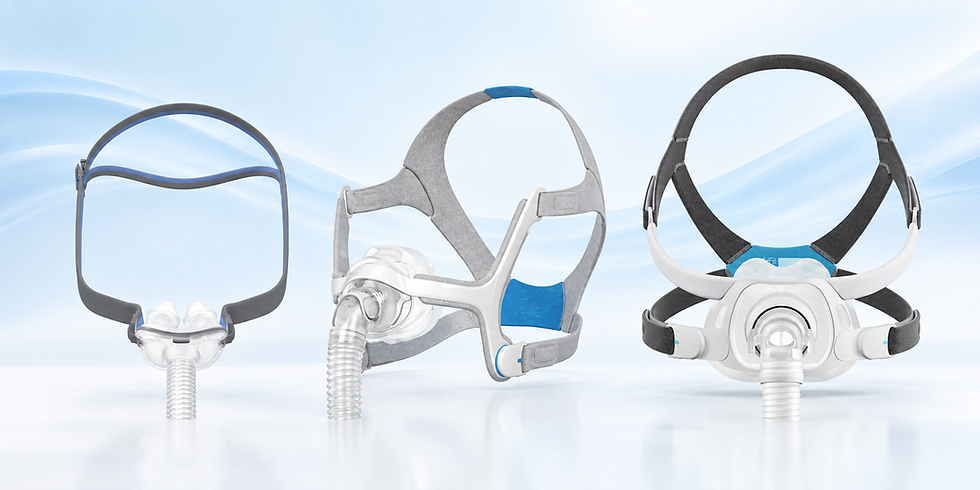
Every CPAP mask deliberately releases a small amount of air through its ventilation ports. This is normal and necessary because it helps remove the carbon dioxide you breathe out while wearing the mask.
What we are concerned about is unintentional leak. This can occur:
around the mask cushion
through the mouth when using a nasal or nasal-pillow mask
from damaged tubing
from incorrectly assembled equipment
from worn mask components
ResMed therapy data is designed to account for the mask's expected vent flow so that the leak information you see relates primarily to excess or unintentional leak.
What Is a Good Leak Rate on a ResMed CPAP Machine?
As a practical guide:
0–10 L/min: Usually excellent
10–20 L/min: Generally acceptable if therapy data and comfort are good
20–24 L/min: Worth watching, particularly if it is persistent
Above 24 L/min: Considered a high leak in ResMed clinical troubleshooting guidance
This does not mean that seeing 25 L/min for a few moments means your treatment has failed.
Ask four questions: How high is the leak? How long does it last? Does it occur repeatedly? Is it affecting your AHI, comfort, sleep quality or pressure delivery?
The pattern matters more than one isolated number.
Why Is 24 L/min Important?
ResMed clinical guidance uses approximately 24 L/min as an important threshold when assessing excessive leak. Once leak becomes significant, the CPAP machine may have more difficulty maintaining effective therapy and accurately interpreting your breathing.
This is why we prefer to correct significant leak before making conclusions based only on the AHI number.
Example: AHI 2.1 events/hour with a leak of 35 L/min. The AHI appears excellent, but substantial leak for a large part of the night needs to be understood before assuming therapy is perfectly controlled.
Your CPAP data should always be interpreted as a whole picture.
What Does 95th Percentile Leak Mean?
This is one of the most misunderstood CPAP numbers. If your ResMed report shows a 95% leak of 18 L/min, it does not mean you leaked at 18 L/min for 95% of the night.
It means your leak was at or below approximately 18 L/min for 95% of the recorded time, with only about 5% of the time occurring above that level.
A short spike while changing sleeping position may be insignificant. A prolonged period of high leak is much more important.
Why Does My CPAP Mask Leak?
1. Your mask may not fit correctly
A mask that is too large, too small or simply not suited to your facial shape can struggle to maintain a seal. Tightening the mask excessively is not always the solution.
Modern silicone cushions are designed to inflate slightly under pressure and create a seal against the face. Overtightening can distort the cushion and sometimes make leaking worse. The goal is a secure but comfortable fit.
2. Your mask moves when you sleep on your side
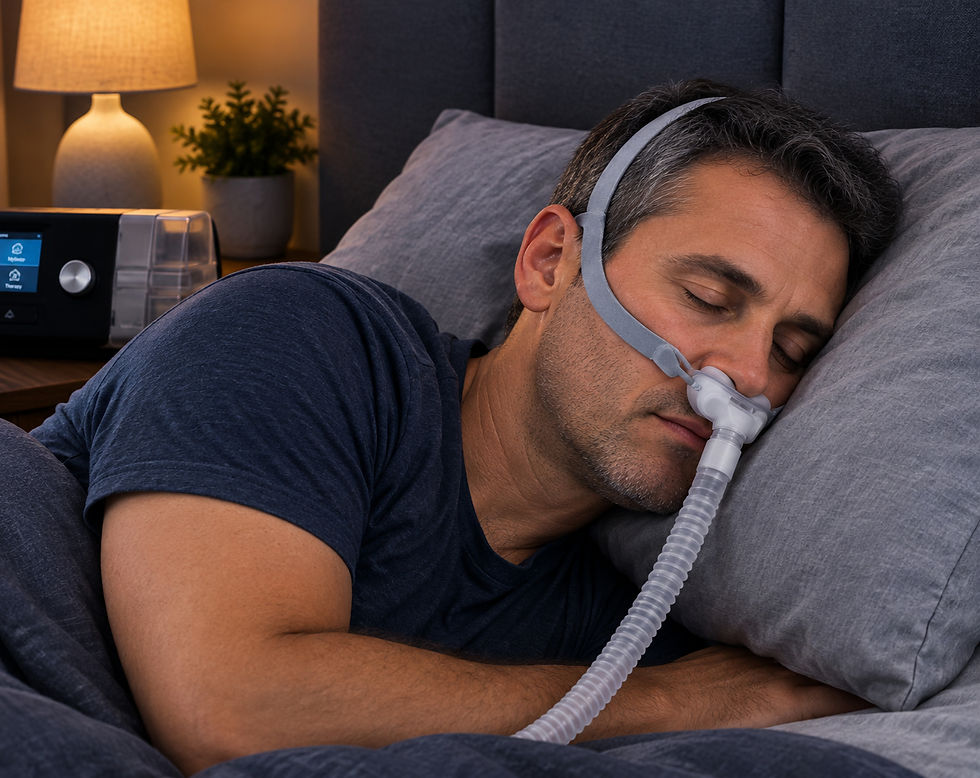
A mask can seal perfectly while you are sitting upright and begin leaking as soon as your head presses into a pillow. This is particularly common in people who sleep on their side, move frequently, sleep partly on their stomach or push the mask into a firm pillow.
3. You may be leaking through your mouth
This is particularly important if you use a nasal mask or nasal-pillow mask. If your mouth falls open during sleep, some pressurised air can escape through your mouth.
Possible clues include waking with a very dry mouth, your partner noticing escaping air, increased leak despite a well-sealed nasal mask, or therapy that suddenly feels less effective.
4. Your mask cushion may be worn
Over time, facial oils, cleaning, movement and normal material ageing can make silicone cushions softer, less resilient, discoloured, stretched and more difficult to seal.
5. Your headgear may have stretched
Headgear gradually loses elasticity. If you keep tightening the straps more and more, replacing the headgear or cushion may work better than continually tightening the mask.
6. Your mask type setting may be incorrect
On compatible ResMed CPAP machines, the selected mask type helps the device account for characteristics of different interfaces, including pillows, nasal masks and full-face masks. Selecting the correct mask setting helps the device interpret and compensate for the mask appropriately.
Can a CPAP Leak Affect My AHI?
Yes — particularly when the leak becomes substantial. High leak can interfere with effective pressure delivery and may also reduce the reliability of some therapy measurements.
When reviewing CPAP therapy, consider AHI, obstructive versus central events, leak, pressure requirements, usage time, mask type, symptoms and oxygenation when relevant.
Your AHI is important, but AHI is not your entire CPAP report.
My AHI Is Below 5 — Should I Still Care About Leak?
Yes. An AHI below 5 events per hour is often reassuring, but it does not automatically mean every aspect of therapy is optimal.
Someone may have an AHI of 2.5 together with significant mask leak, repeated awakenings, dry mouth, poor sleep quality and persistent daytime fatigue. That person may have a low device-reported AHI while still having a therapy problem worth investigating.
Look at the trend, not one number.
Is Zero Leak the Goal?
Not necessarily. Do not become obsessed with achieving a perfect 0 L/min every night. People move during sleep, masks shift and the seal may break temporarily.
The goal is stable, effective and comfortable therapy without prolonged excessive leak — not numerical perfection.
How Can I Reduce My CPAP Leak?
Start with the simplest causes first:
Make sure your mask is assembled correctly and fitted according to its instructions.
Fit the mask while lying in your normal sleeping position, not only while sitting upright.
Keep the cushion clean and free from facial oils.
Inspect the cushion, headgear and tubing for wear or damage.
Avoid tightening every strap as much as possible.
If you use a nasal interface and wake with a dry mouth, consider mouth leak.
Check that the correct mask type is selected on your CPAP machine.
If leak remains high, the issue may be the mask size, mask design or interface itself rather than your fitting technique.
Should I Change My CPAP Pressure Because My Leak Is High?
Do not change your prescribed CPAP pressure simply because you see a high leak number.
Leak should first be investigated and corrected. Increasing pressure without understanding the cause may make the leak worse, while reducing pressure may leave obstructive events inadequately treated. Pressure requirements should be assessed using the complete therapy data and clinical context.
When Should I Ask for Help With CPAP Leak?
Consider getting your therapy reviewed if:
your leak is repeatedly above approximately 24 L/min
your mask seal has suddenly deteriorated
you regularly wake with a dry mouth
air leaks into your eyes
the mask wakes you during the night
your AHI has increased together with leak
you still feel tired despite using CPAP consistently
your mask needs to be tightened excessively
you are unsure whether your mask is the correct type or size
Sometimes a different cushion size, replacement component or better-suited mask can completely change the quality of your CPAP therapy.
Frequently Asked Questions
What leak rate is acceptable on a ResMed CPAP?
ResMed clinical troubleshooting material identifies leak above approximately 24 L/min as high leak. Lower values are generally preferable, but duration and pattern also matter.
Is a CPAP leak of 10 L/min bad?
Usually not. A leak around 10 L/min is generally relatively low, particularly if therapy is comfortable, AHI is controlled and there are no prolonged periods of higher leak.
Is a CPAP leak of 20 L/min too high?
Not necessarily, but it is worth watching. If leak frequently approaches 24 L/min or remains elevated for extended periods, investigate the cause.
Is a CPAP leak of 30 L/min bad?
A persistent leak around 30 L/min is above ResMed's commonly used high-leak threshold and should generally be investigated. A brief spike is different from remaining at that level for a significant portion of the night.
Can mouth breathing cause a high CPAP leak?
Yes. Mouth leak is a common cause of elevated leak in people using nasal and nasal-pillow masks. Dry mouth on waking can be one clue.
Can high leak make my CPAP AHI inaccurate?
Significant leak can make therapy data more difficult to interpret and interfere with effective pressure delivery. Consider AHI together with leak, pressure, usage and symptoms.
The Bottom Line
A good CPAP leak rate is not simply about chasing the lowest possible number. For ResMed users, persistent leak above approximately 24 L/min deserves attention, but the duration and pattern are just as important as the peak value.
Occasional small leaks are normal. Prolonged excessive leak is not.
If your AHI looks good but your leak is high — or you still do not feel better — your CPAP data deserves a closer look.
About CPAP Equip
At CPAP Equip, we believe successful CPAP therapy is about more than selling a machine. It is about making sure the machine, mask, settings and therapy data continue working together effectively.
Clinically Supported CPAP Therapy. Nationwide.
Mev. JM Claassens
Clinical Technologist (Pulmonology)
CPAP Equip

Comments